


MiSight vs. Atropine Drops: Choosing the Right Fall Myopia Control for Your San Diego Student
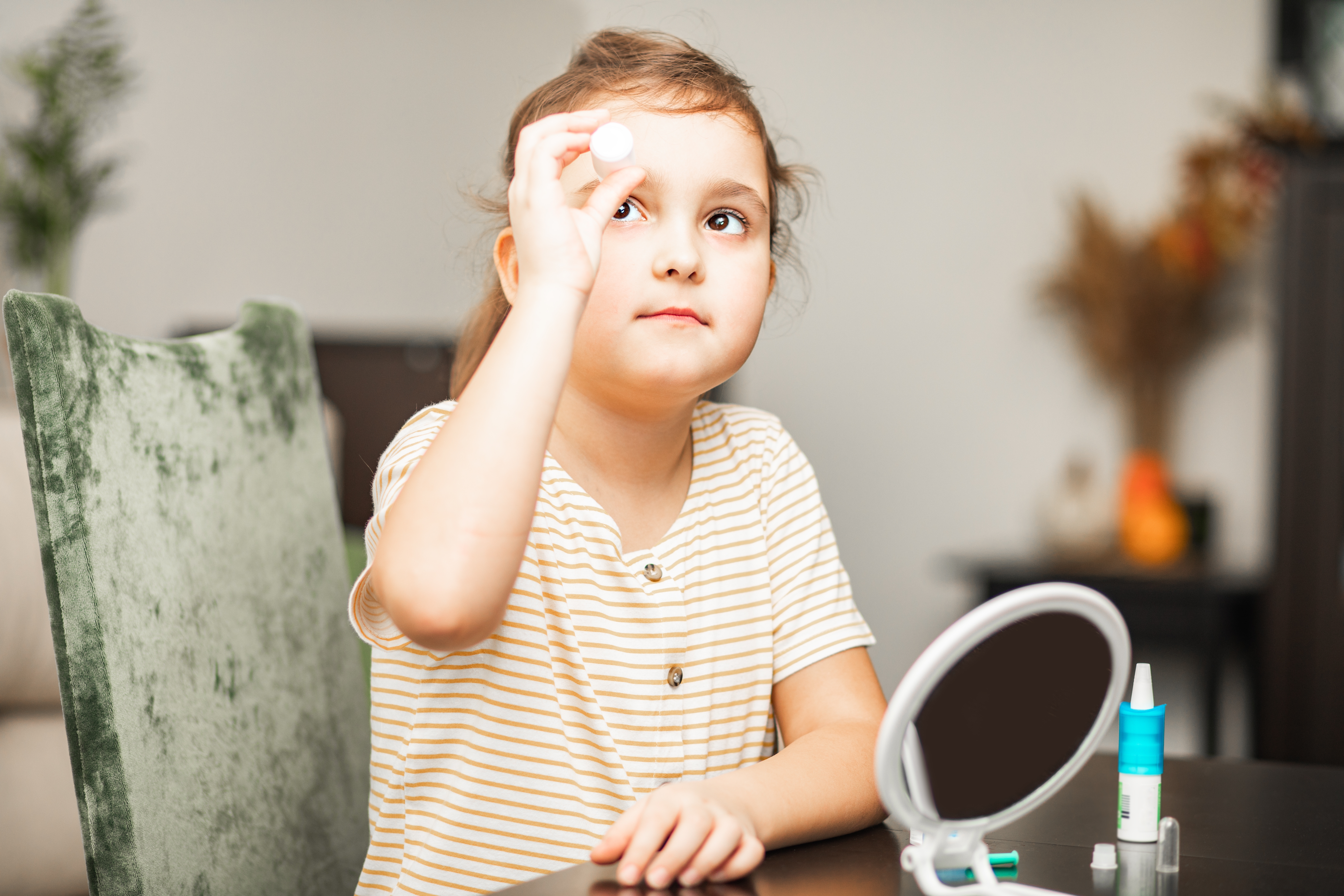
Fall brings San Diego students back into a routine filled with classroom learning, homework, reading, and screen time. If your child's nearsightedness has been getting stronger, this can also be a good time to discuss myopia control.
At Focal Optometry, we offer several approaches to myopia management, including MiSight 1 day contact lenses and low-dose atropine drops. Both are designed to help slow myopia progression, but they work differently and are not equally suited to every child.
Why Does Myopia Control Matter?
Myopia causes distant objects to appear blurry and often progresses while a child's eyes are still growing. Standard glasses can correct blurry vision, but ordinary single-vision glasses do not slow the underlying progression of myopia.
Slowing progression matters because higher levels of myopia are associated with increased risks of certain eye diseases later in life. Myopia management focuses on reducing the rate of progression while continuing to provide clear, functional vision.
How Does MiSight Work?
MiSight 1 day is a daily disposable soft contact lens designed to correct nearsightedness while also slowing myopia progression. Its specialized optical design provides clear central vision while creating treatment zones intended to influence how the eye grows.
FDA labeling specifies initiation for children ages 8 through 12 with healthy eyes, myopia from -0.75 to -4.00 diopters, and no more than 0.75 diopters of astigmatism.
For families considering MiSight in San Diego, important factors include:
Whether your child is comfortable inserting and removing contacts
Their ability to follow proper handwashing and lens hygiene
Their prescription and overall eye health
Their school, sports, and daily activity routine
Their ability to wear the lenses consistently as prescribed
MiSight lenses are single-use lenses. They should be removed and discarded each day, never reused, and never worn while sleeping.
How Are Atropine Drops Different?
Low-dose atropine uses prescription eye drops rather than contact lenses. The drops are commonly administered at home, often at bedtime, according to the treatment plan provided by the eye doctor.
Research has found that certain atropine concentrations can slow myopia progression in some children, although response can vary. Atropine for myopia control is an off-label use in the United States, meaning the medication is being prescribed for a purpose that is not specifically FDA-approved in its labeling.
Possible side effects can include light sensitivity and difficulty focusing at near, with effects varying depending on the concentration and the individual child.
MiSight vs. Atropine: Which Is Better?
There is no universal winner. MiSight provides vision correction and myopia control in the same daytime contact lens. Atropine does not correct blurry distance vision, so children using atropine generally still need glasses or contact lenses for their prescription.
A child who is ready for daily contacts may prefer MiSight, while another child may be better suited to atropine. In some situations, eye doctors may also consider combination approaches based on progression and clinical findings.
At Focal Optometry, we look at prescription changes, eye health, age, lifestyle, and other factors before recommending a myopia management plan.
Make Fall Eye Care Part of the School Routine
Outdoor time and regular breaks from prolonged near work can support healthy visual habits, but they do not replace prescribed myopia treatment when a child's nearsightedness is progressing. Regular follow-up is also important so we can monitor changes and adjust the plan when needed.
If your San Diego student is becoming more nearsighted, contact Focal Optometry at 9460 Mira Mesa Blvd Suite A, San Diego, CA 92126 by calling (858) 566-1756 to schedule a myopia management evaluation and discuss whether MiSight, atropine drops, or another approach is appropriate.



Hours Of Operation
- MondayBy Appointment Only
- Tuesday10:00am - 6:00pm
- Wednesday9:00am - 5:00pm
- Thursday9:00am - 5:00pm
- Friday9:00am - 5:00pm
- Saturday9:00am - 2:00pm
- SundayClosed
© 2026 Focal Optometry. All rights Reserved. Accessibility Statement - Privacy Policy - Sitemap
Powered by:
